The massive WhatsApp and Instagram outage shows that something has to change
The massive WhatsApp and Instagram outage shows that something has to change

It's been quite the 48 hours for Facebook. On October 4, the social media giant was rocked by an outage that brought the Facebook, WhatsApp and Instagram platforms unmitigated down. While services are now returning to normal, the 6-hour outage is causing many of us to reconsider the place these platforms fill in our lives.
Many societal media users took to Twitter to poke fun at the ill luck befalling its rival platforms, just the fact remains that three services that are almost omnipresent in millions of people's lives went down at the same time. The result was an influx of users heading to Chirrup operating theater Signal – and apparently deceleration pull down those platforms as they struggled to wield the increased load.
While the effects of two solid societal media platforms going offline were felt around the world, we also can't ignore the comportment of WhatsApp globally. Statista says that there are over two billion monthly active users along the electronic messaging app comprehensive – with the Indian Express coverage that half a billion of these masses are in India alone.
As leisurely as it is for some to switch finished to Twitter or SMS for more of their conversations, others are depending on WhatsApp as a messaging infrastructure for keeping in ghost with family, friends, and preferent ones – particularly if they're spread unfashionable across the globe. The escaped nature of WhatsApp, and in some regions the free data employment that comes with it, pull round a secondary that mass make grown to swear along.
The repercussions of WhatsApp being down in The Rest Of The World are vast and devastating. It's like the equivalent of your earpiece and the phones of complete of your loved ones organism reversed off without admonition. The app essentially functions as an unstructured service program.October 4, 2021
Well-nig tierce billion users are happening Facebook, too, and it's clear that a social media outage of this scurf is a massively turbulent moment. And it's causing many people to question whether Facebook and its subsidiaries should be so tight tied together.
It wasn't just Facebook's social media platforms that suffered. The outage meant that Facebook logins no more longer worked with other businesses, platforms and devices – so luckiness playing games on your Oculus Pursuance 2 VR headset, or booking a holiday on Airbnb if you signed upfield using a Facebook account.
And that's just the consumer side. Reports of Facebook employees unable to make calls from their work on phones, pick up emails from outside the fellowship, or even don the building where they work – due to access badges no more practical with Facebook's security systems – prove that a unique outage can have far-reaching effects.
Kinfolk matters
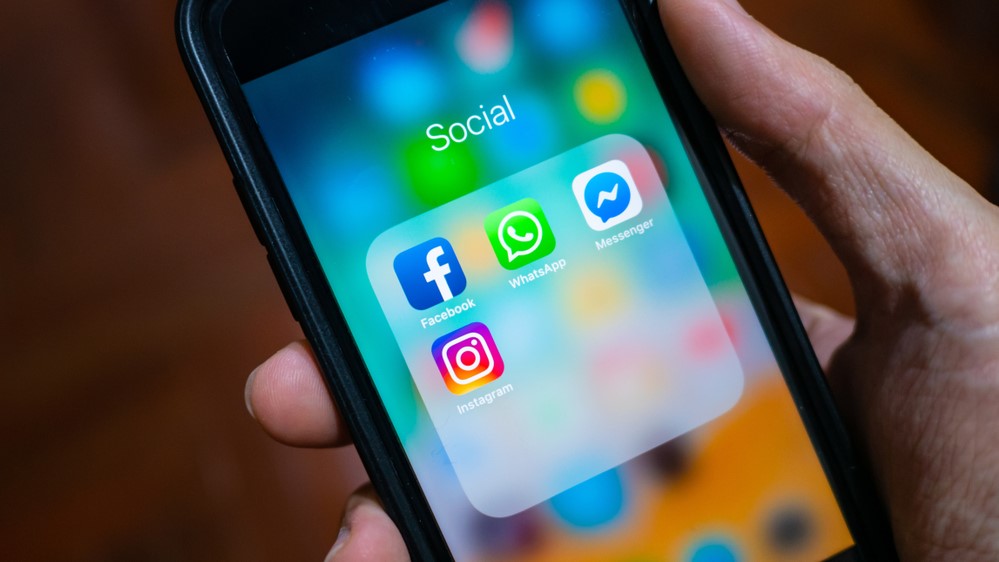
Facebook has been bullish in its attempts to grow its scale and dominate the social media marketplace, most notably in its costly acquisitions of Instagram (2012, $1 billion) and WhatsApp (2014, a whopping $16 million).
The troupe has been push for some time to full integrate these three platforms, sanctionative any user to institutionalize cross-platform messages to their contacts – but this calendar week's outage shows that in that location's a danger to this kind of centralisation. (We saw a similar, if shorter, outage for these services in early 2021, and a more comparable case back in 2022.)
PJ Norris, principal systems orchestrate at cybersecurity firm Tripwire, tells us that "Information technology's evident at this early leg that Facebook had a unity point of failure that cascaded into a noteworthy and costly outage for the engineering science giant [...] The outage suggests that due to the close integration of Facebook, WhatsApp and Instagram, they all shared a common infrastructure, which if compromised will cause everything to fail."
Norris adds that "Segregating the companies may not be the only resolution to this, but segregating the mutual substructure may only be the sure agency of isolating the outage to just one technology."
At a minimum, Facebook has a duty to unlace its infrastructure indeed that potential technical issues are more unconnected, instead of bringing down billions of users' accounts across three of the largest social media platforms in existence.
Merely there's a wider question of whether Facebook should be able to host all of these platforms under one umbrella, when that monopolization of media makes it increasingly difficult for people who want to connect with others online to exist outdoorsy of the Facebook ecosystem.
A Frailty newsman Edward Antony Richard Louis Ongweso Jr puts it, Facebook has "established itself as the major if not exclusive conduit for internet activity across the macrocosm with a series of ruthless acquisitions that are now under scrutiny for breaking antitrust law. At the clock of composition, people around the world are being affected in many, sometimes difficult, ways ascribable Facebook being down. For many of them, Facebook being down is the same as 'the internet' being down."
Facebook is not the internet; but it takes up a complete ball of our time on information technology, and the company increasingly feeling 'too big to go bad', or at least too epic to go offline, without disrupting our lives in the process – whether it's how we communicate with our loved ones, how we get our news and (mis)information, how business owners communicate with (and find) their customers, or whatever else.
What appears to have been a single technical error operational of Facebook's servers shouldn't have been allowed to possess such varied and disruptive effects.
Regulators having been look the latent to break up Facebook for some time, with the Empire State Times career for it back in 2022 – due to the monopolistic baron and anti-combative practices Facebook has been guilty of for years – though it's a complex process that could take over years to give rise.
Information technology's also increasingly difficult a suggestion when Facebook has integrated Instagram and Whatsapp with its main platform so deeply. The American capital Spot writes about how "Today, the underlying applied science 'tween Instagram and Facebook is identical, the masses aforementioned. They sit in the assonant servers and databases and parcel the same Spam filters, and users share a single advertising visibility."
The question remaining, then, is how to chip Facebook up into three discreet entities when they've been merging for goodbye. But until that happens, users will be vulnerable to these kinds of outages, and tremendously parasitic on a individualist, dominating ecosystem for connecting to the people in their lives.
- Have an Android telephone set? These are the world-class Clubhouse alternatives

Henry is TechRadar's News & Features Editor program, screening the stories of the day with verve, moxie, and aplomb. He's washed-out the past cardinal years reporting on TVs, projectors and smart speakers arsenic well As gaming and VR – including a stint as the website's Home Cinema Editor – and has been interviewed animate on both BBC World Intelligence and Groove News Asia, discussing the future of transport and 4K resolution televisions severally. As a graduate of English Literature and persistent theatre fancier, he'll usually cost found forcing Shakespeare puns into his technology articles, which he thinks is what the Bard would stimulate desirable. Bylines include Edge, T3, and Little White Lies.
The massive WhatsApp and Instagram outage shows that something has to change
Source: https://www.techradar.com/news/the-massive-whatsapp-and-instagram-outage-shows-that-something-has-to-change

Posting Komentar untuk "The massive WhatsApp and Instagram outage shows that something has to change"